
Stairs and Landing Ideas – Stylish, Safe, and Built to UK Standards
Looking for stairs and landing ideas? When it comes to home design, stairs and landings are often overlooked – treated simply as a way to get from one floor to another. But with a little creativity, they can become striking design features while remaining safe, functional, and compliant with UK building regulations. Whether you’re renovating, extending, or building from scratch, here’s everything you need to know to turn your staircase and landing into a real showpiece.
Why Stairs and Landings Matter
A staircase isn’t just a route between floors; it’s often one of the first things you see when entering a home. A thoughtfully designed staircase can:
-
Enhance your interior style – from modern minimalism to traditional elegance.
-
Improve flow and accessibility throughout the house.
-
Increase natural light between floors.
-
Add a sense of openness or, conversely, create cosy defined spaces.
The landing, meanwhile, is a transitional area that can be more than a simple passage. With the right approach, it can serve as a reading nook, display space, or a light-filled feature connecting different zones of your home.
Understanding UK Stair and Landing Regulations
Before exploring design ideas, it’s important to know the basic rules that keep staircases and landings safe in the UK. The primary guidance comes from Approved Document K of the Building Regulations (covering protection from falling, collision, and impact) and Approved Document M (covering access).
Here are some key points:
-
Maximum Rise and Minimum Going:
-
Rise (height of each step) must not exceed 220mm.
-
Going (depth of each step) must be at least 220mm.
-
The two together should create a comfortable walking angle.
-
-
Pitch:
-
The pitch of a domestic staircase must not exceed 42°.
-
-
Headroom:
-
A minimum headroom of 2m is required over the centre of the stair tread.
-
-
Width:
-
No minimum set for private stairs, but 800mm–900mm is common for comfortable use.
-
-
Landings:
-
A landing must be provided at the top and bottom of every staircase.
-
It must be at least as wide as the staircase and at least 400mm in length.
-
-
Handrails and Balustrades:
-
Handrails are required on at least one side for stairs less than 1m wide, and both sides if wider.
-
The height of a handrail should be between 900mm and 1000mm measured from the pitch line.
-
Gaps in balustrades must be less than 100mm to prevent children from passing through.
-
Keeping these in mind from the outset ensures your ideas remain achievable – avoiding costly redesigns later.
Design Styles for UK Homes
1. Modern Minimalist
Think clean lines, open risers, and sleek materials such as glass and steel. A glass balustrade allows light to flow, making smaller hallways feel more spacious. Pair with timber treads for warmth or polished concrete for an ultra-contemporary finish.
2. Traditional Elegance
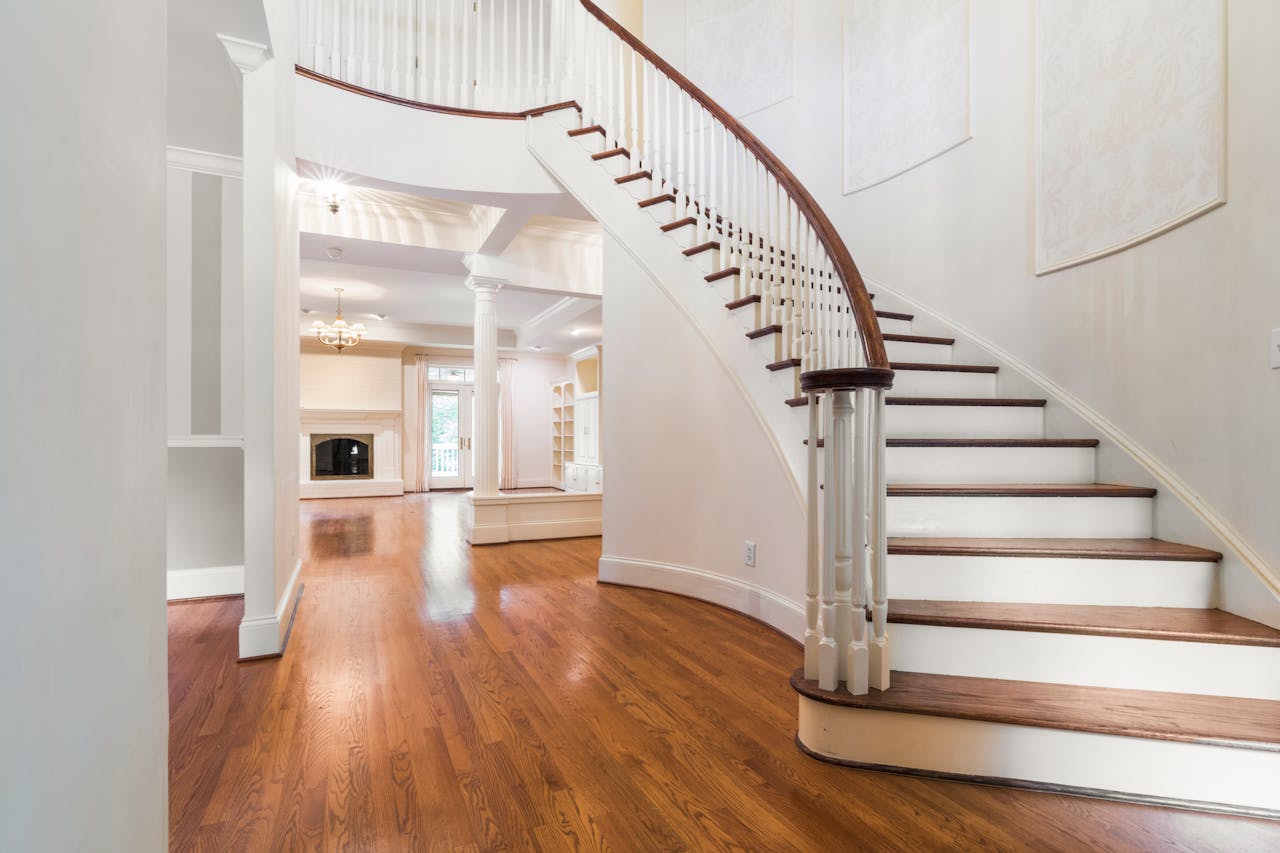
For period homes, a staircase with turned timber spindles, a polished handrail, and decorative newel posts can maintain heritage charm. Rich stains or painted finishes in soft heritage tones work beautifully.
3. Space-Saving Solutions
If space is limited, consider alternating tread stairs or a compact spiral design – but note these require careful planning to meet safety requirements. A winder staircase (where steps turn a corner without a landing) can also work in tighter areas, provided the treads remain compliant.
4. Statement Feature Staircase
Make your stairs the centrepiece with a floating design, dramatic curves, or a bold colour. LED tread lighting adds impact and aids safety. This style suits open-plan layouts where the staircase is visible from multiple angles.
Landing Ideas to Maximise Space
The landing doesn’t have to be purely functional. With clever design, it can serve as an extension of your living space.
-
Reading Corner: Install a built-in bench under a window with soft cushions and a small bookcase.
-
Gallery Wall: Use the wall space along the landing for framed art or family photographs.
-
Study Nook: For wider landings, a slim desk and shelving can create a quiet workspace.
-
Plant Display: Landings often receive good natural light, making them perfect for indoor greenery.
If your landing overlooks the stairs, consider replacing spindles with glass panels to create an airy, connected feel between floors.
Lighting for Stairs and Landings
Lighting is both a safety and design element. In UK homes, options include:
-
Recessed LED Step Lights: Improve visibility and add subtle ambience.
-
Pendant Lighting: Works well in double-height spaces above the stairs – just ensure clearance complies with the 2m headroom rule.
-
Wall Sconces: Evenly illuminate the stairwell without harsh overhead glare.
-
Natural Light: Roof windows or sun tunnels above the landing can flood the area with daylight.
Materials and Finishes
The materials you choose affect both the look and longevity of your stairs.
-
Timber: Classic and warm, suitable for traditional or modern homes. Oak and ash are popular for durability.
-
Metal: Strong and versatile, often used for industrial or minimalist designs.
-
Glass: Ideal for balustrades to maximise light and create a feeling of openness.
-
Carpet Runners: Soften the look and reduce noise, while adding a pop of colour or pattern.
Remember that surfaces must provide adequate slip resistance – especially important for families and older residents.
Safety Enhancements
Beyond the regulations, consider additional safety measures:
-
Non-Slip Treads: Particularly useful for timber or painted stairs.
-
Continuous Handrails: Reduce the risk of falls, especially for children and elderly users.
-
Good Lighting Control: Ensure switches are available at both the top and bottom of the stairs.
Planning Your Staircase Project
If you’re renovating or installing new stairs:
-
Consult with a Professional Early – An architect, builder, or staircase specialist can ensure your ideas meet UK regulations.
-
Measure Precisely – Even a few millimetres out can make a staircase unsafe or non-compliant.
-
Consider Future Needs – Wider stairs and gentler rises improve accessibility for all ages.
-
Integrate with the Overall Design – Think about how your staircase connects visually with surrounding spaces.
Stairs and landing ideas – Conclusion
Stairs and landing ideas – Stairs and landings can be so much more than functional necessities. By blending creativity with compliance, you can design a staircase that is safe, practical, and a stunning focal point in your home. From sleek glass balustrades to cosy landing reading corners, the possibilities are endless – as long as you keep UK building regulations firmly in mind.
With thoughtful planning and attention to detail, your stairs and landing can elevate your interior design while making daily life more comfortable and enjoyable.
Contact us today to disucss your staircase requirements or use our online staircase builder tool.