Stairs Runner Ideas – Stylish, Safe & UK Regulation-Friendly
Looking for stairs runner ideas? A stairs runner can completely transform the look and feel of your staircase. Whether you live in a period property or a modern townhouse, a runner adds warmth, style, and safety – while also allowing you to showcase the beauty of your timber treads. But in the UK, you’ll also need to ensure your runner complies with relevant regulations for safety and practicality.
This guide explores stairs runner ideas for British homes, covering design inspiration, installation tips, and the key rules you need to know before getting started.
Why Choose a Stairs Runner?
A stair runner is a narrow carpet fitted down the middle of a staircase, leaving the edges of the treads visible. It offers several benefits:
-
Visual impact – Adds colour, texture, and a focal point to your hallway.
-
Noise reduction – Softens footfall and reduces echo in your home.
-
Safety – Provides grip and reduces the risk of slipping.
-
Comfort – Warmer underfoot than bare timber or stone stairs.
UK Safety & Building Regulation Considerations
Before you pick a pattern, it’s worth knowing the basics of UK safety guidelines for stair coverings:
-
Slip resistance
According to the UK Building Regulations Approved Document K, stair surfaces should provide adequate slip resistance. Choose a runner with a dense, grippy weave (such as wool or a wool blend) rather than a silky or glossy finish. -
Width and coverage
There’s no legal requirement on exact runner width, but most UK installers recommend leaving 100–150 mm (4–6 inches) of stair edge visible on either side for balance and aesthetics. -
Securing the runner
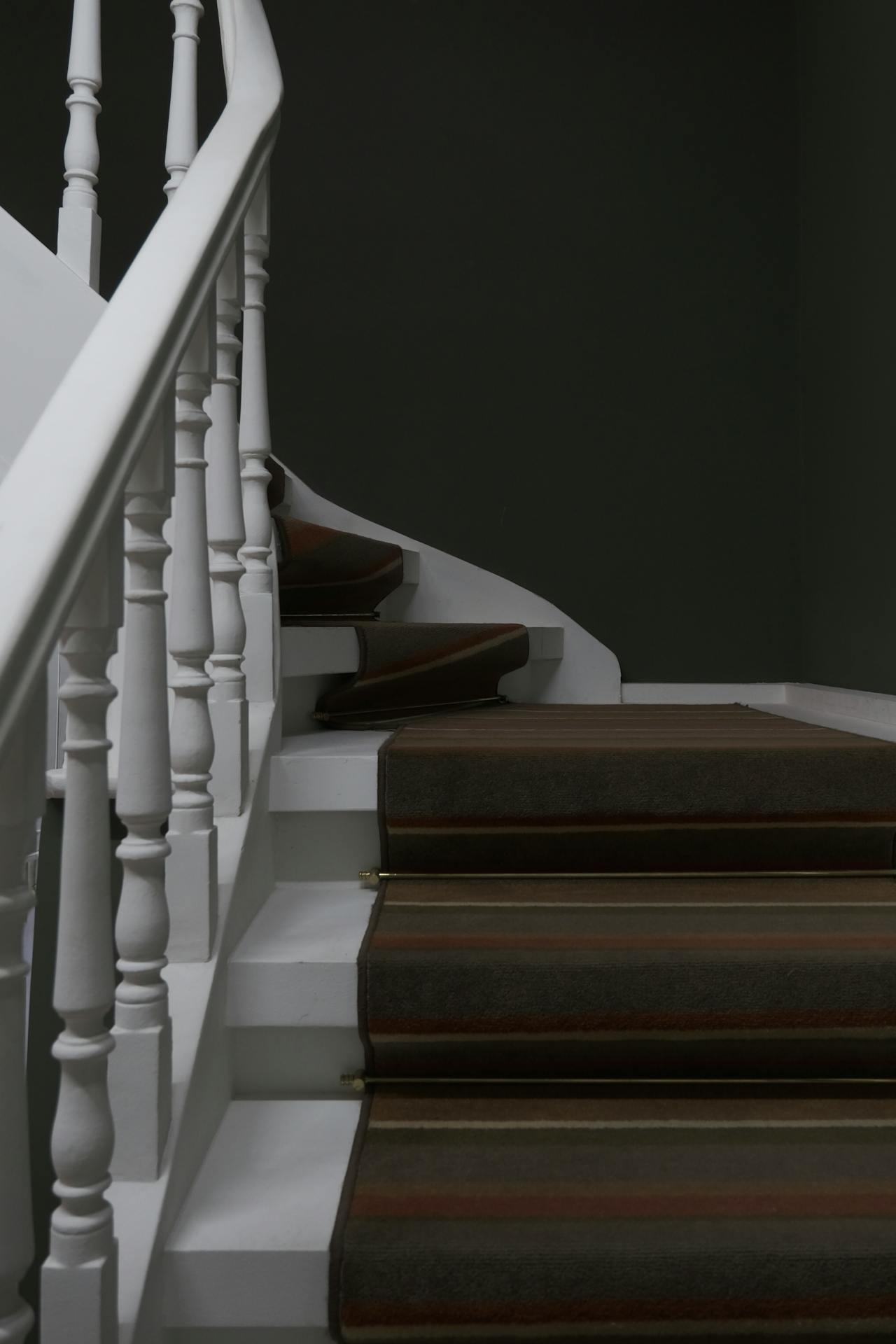
The runner must be securely fixed to prevent movement. In the UK, it’s common to use gripper rods and underlay, with optional decorative stair rods for style. Loose-laid runners are unsafe and non-compliant. -
Uniformity
The rise and going (height and depth of each step) must remain consistent after installation. An uneven tread depth due to a thick runner edge can pose a tripping hazard.
Popular Stairs Runner Styles in the UK
1. Classic Stripes
Striped runners are a British favourite, especially in Victorian and Edwardian homes. Vertical stripes elongate the staircase visually, while multi-coloured stripes add a playful touch.
Pro Tip: For narrow terraces or cottages, go for slim stripes to make stairs look wider.
2. Neutral Elegance
Natural fibres in muted shades like oatmeal, beige, or soft grey create a timeless, understated look. This works beautifully with modern minimalist interiors and period homes alike.
UK Tip: Choose a hardwearing wool with a tight loop pile to withstand heavy foot traffic.
3. Bold Geometrics
From chevrons to diamond patterns, geometric designs make a staircase a true design statement. They pair well with white-painted banisters or deep navy walls.
Regulation Note: Patterns should be chosen with clear visual definition to avoid creating an optical illusion that could obscure step edges.
4. Heritage Herringbone
Herringbone weaves bring texture and a traditional British tailoring feel. They suit both rural country houses and elegant London townhouses.
5. Colour-Pop Borders
A plain central runner with a contrasting border creates a refined look. It’s also a great way to tie the staircase colour scheme into adjoining rooms.
Choosing the Right Material
The UK climate and daily wear demand durable, easy-to-clean fibres.
-
Wool – Naturally resilient, flame-resistant, and excellent at hiding dirt.
-
Wool blends – More affordable than 100% wool, with added durability from man-made fibres.
-
Synthetic fibres – Budget-friendly and stain-resistant, though not as luxurious as wool.
For UK homes with pets or children, consider a short loop pile for durability and easier cleaning.
Measuring & Planning
Accurate measurement is key, particularly in Victorian or Georgian homes where staircases may have winders or varying step depths.
Typical UK runner widths:
-
Narrow stairs (under 800 mm wide): runner 500–600 mm.
-
Standard stairs (around 900 mm wide): runner 600–700 mm.
Always measure tread width, riser height, and number of steps before ordering, and factor in landings or turns.
Installation: DIY or Professional?
While some confident DIYers attempt fitting their own runners, most UK homeowners opt for a professional carpet fitter. Reasons include:
-
Precise fitting around winders and turns.
-
Secure fixing with gripper rods and underlay.
-
Compliance with British Standard 5287 for carpet installation.
Professional fitting also reduces the risk of buckling or premature wear.
Decorative Stair Rods: Form & Function
While not strictly necessary for securing modern runners (thanks to gripper rods), stair rods are a popular decorative feature in UK homes.
Options include:
-
Brass for a traditional look.
-
Chrome or nickel for a contemporary feel.
-
Wrought iron for rustic or country properties.
Maintenance & Care
Keeping your runner fresh and safe involves:
-
Weekly vacuuming – Use the stair attachment to reach edges.
-
Prompt stain treatment – Blot spills with a clean, damp cloth.
-
Annual deep clean – Especially in high-traffic households.
-
Tightness check – Ensure the runner remains firmly fixed to avoid trip hazards.
Sustainability & Eco-Friendly Options
With more UK homeowners seeking sustainable interiors, consider:
-
Undyed wool runners for natural colour and minimal chemical use.
-
Recycled fibres – PET yarns made from recycled plastic bottles.
-
Natural underlay – Felt or jute instead of synthetic foam.
Coordinating with Your Hallway
In British homes, the staircase is often visible from the hallway, so it’s worth coordinating:
-
Match runner tones to hallway carpets or rugs.
-
Contrast for a bold statement.
-
Complement wall panelling or skirting colours.
Stairs Runner Ideas: Blending Style with Safety
A well-chosen stairs runner can elevate your home’s character while making your staircase safer and quieter. By considering UK regulations on slip resistance, secure fitting, and tread consistency, you can ensure your runner is not only stylish but also practical.
From classic stripes to modern geometrics, there’s a design to suit every British home – and with professional fitting and proper care, it will serve you beautifully for years.
Contact us today to disucss your staircase requirements or use our online staircase builder tool.