
Stairs No Carpet Ideas – A Complete Guide for UK Homes
Transform Your Staircase with a Modern, Carpet-Free Look
Are you searching for stairs no carpet ideas? Whether you’re renovating a period property or updating a modern home, going for stairs with no carpet is a stylish, practical choice. Hardwood, engineered wood, laminate, stone, or painted stairs can all create a clean, contemporary feel. In the UK, a growing number of homeowners are opting for this low-maintenance finish—removing old carpet in favour of sleek, durable surfaces that are easier to clean and maintain.
But before you strip back your stairs, it’s important to understand the design possibilities, safety considerations, and UK regulations that apply.
Why Choose Stairs Without Carpet?
1. Easy Maintenance
Carpeted stairs can trap dust, allergens, and dirt, making them harder to clean. A carpet-free staircase can be swept, vacuumed, or mopped in minutes.
2. Stylish and Versatile
From traditional oak to minimalist painted treads, there’s a huge range of finishes to suit your décor. You can keep a warm, classic look or embrace a bold, modern style.
3. Longer Lifespan
High-quality timber or stone treads can last for decades if properly maintained, whereas stair carpet often needs replacing every 5–10 years due to wear.
4. Allergy-Friendly
Removing carpet reduces trapped dust and pollen—an advantage for households with allergy or asthma sufferers.
Popular Materials for Carpet-Free Stairs
Solid Wood
Oak, ash, and beech are popular hardwood choices for stair treads, offering excellent durability and a timeless look.
Engineered Wood
A more cost-effective option, engineered wood combines a hardwood veneer with a strong plywood base.
Laminate
Budget-friendly and available in many styles, laminate stairs are scratch-resistant and easy to clean.
Painted Timber
Painting stairs in a hardwearing floor paint can brighten a hallway and make a strong design statement.
Stone or Tiles
Marble, granite, or porcelain tiles create a luxury feel, but require precise installation and may need anti-slip measures.
UK Building Regulations for Carpet-Free Stairs
If you’re changing your stairs from carpet to another finish, it’s important to ensure compliance with UK Building Regulations—particularly Approved Document K (Protection from falling, collision, and impact) and BS 5395-1:2010 (Stair design).
Key requirements include:
1. Tread and Riser Dimensions
-
Domestic stairs:
-
Maximum rise (vertical height per step): 220mm
-
Minimum going (depth of step): 220mm
-
Pitch (angle of staircase): should not exceed 42°
-
2. Slip Resistance
Carpet naturally provides grip, so when going carpet-free, you must ensure adequate slip resistance.
-
For timber, choose a textured finish or add anti-slip inserts/nosings.
-
Stone or tile must have a pendulum test value (PTV) of 36 or higher in dry conditions.
3. Handrails
-
Required on at least one side if the stairs are less than 1 metre wide.
-
Required on both sides if the stairs are 1 metre or wider.
-
Height: 900mm–1000mm from the pitch line.
4. Nosings and Edges
-
Nosings should be clearly visible and not create a tripping hazard.
-
Contrasting colour strips can be used for better visibility.
5. Headroom
-
Minimum of 2 metres above the pitch line.
Safety Considerations for Carpet-Free Stairs
Noise Control
Hard surfaces amplify footstep noise. Consider adding stair runners, soft-close doors nearby, or acoustic underlays under the treads.
Anti-Slip Treatments
You can apply clear anti-slip coatings, adhesive strips, or embedded stair nosings to improve grip.
Lighting
Adequate stair lighting—especially on darker materials—is essential for safety. Low-level LED strips along the wall or under the nosing can be both practical and stylish.
The Process of Removing Carpet from Stairs
-
Preparation – Remove furniture from nearby areas and protect surrounding floors.
-
Carpet Removal – Carefully pull back the carpet from one corner, remove underlay, and pull out staples or tacks.
-
Check the Condition of Treads – Sand down rough patches and repair any cracks or squeaks.
-
Choose Your Finish – Decide whether to stain, paint, or install a new material.
-
Apply Protective Coating – Use varnish, oil, or sealant for timber, or grout sealer for tiled stairs.
-
Add Safety Features – Install handrails, nosing strips, or anti-slip coatings to meet UK safety standards.
Cost of Carpet-Free Stairs in the UK
Prices vary depending on the material and complexity of the work:
| Finish Type | Average Cost per Step | Total for 13 Steps (Typical UK Staircase) |
|---|---|---|
| Paint & Seal | £10 – £20 | £130 – £260 |
| Laminate | £25 – £45 | £325 – £585 |
| Solid Oak | £60 – £120 | £780 – £1,560 |
| Stone/Tiles | £80 – £200 | £1,040 – £2,600 |
Figures include materials and labour but may vary regionally.
Maintenance Tips for Long-Lasting Stairs
-
Sweep or vacuum regularly to prevent grit scratching the surface.
-
Use felt pads under furniture or large objects being moved upstairs.
-
Refresh varnish or oil on timber every 2–3 years.
-
Wipe up spills immediately to avoid staining wood or stone.
Design Inspiration for UK Homes
Minimalist White & Wood
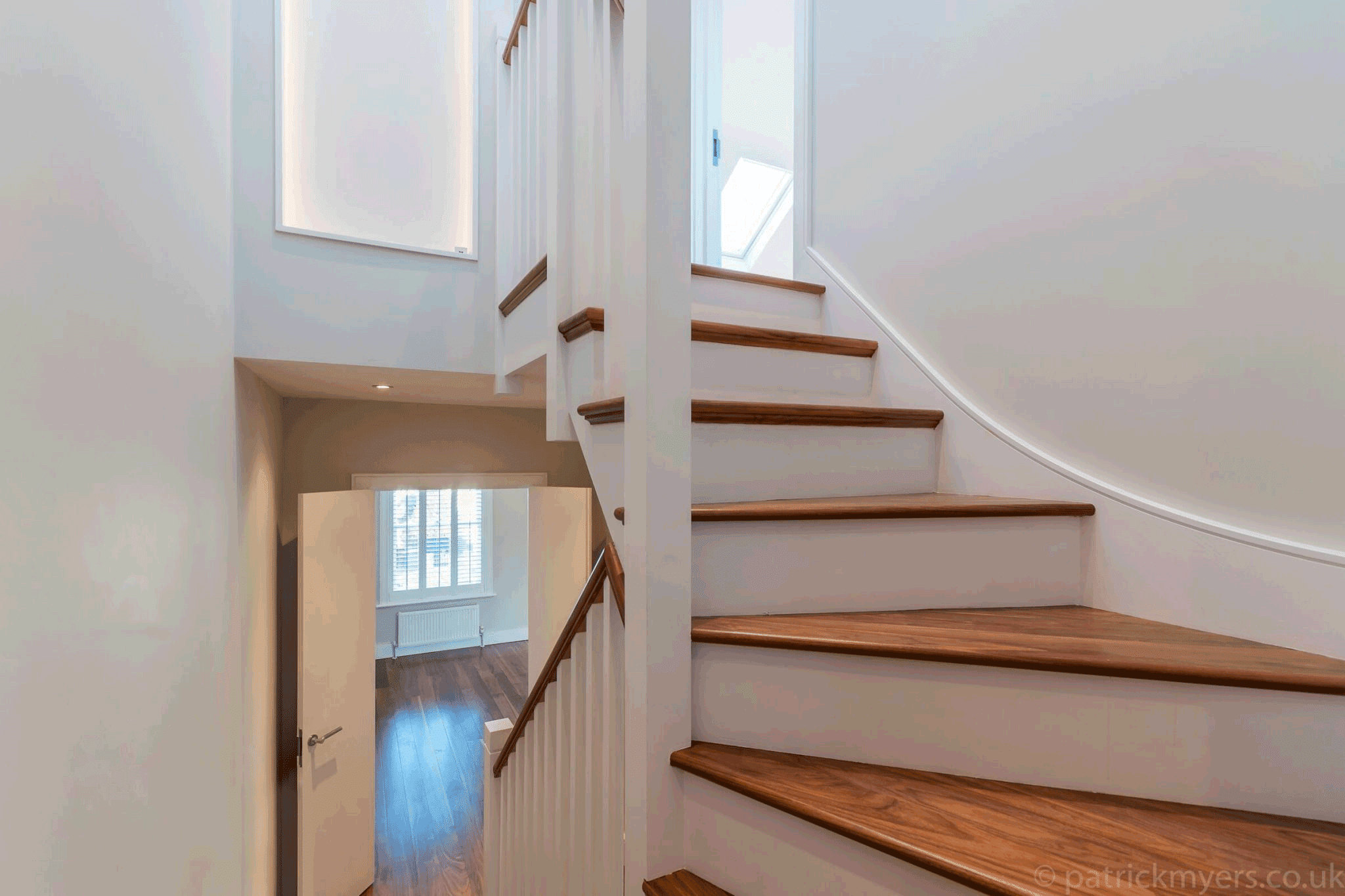
Paint the risers white and keep the treads in natural oak for a fresh, Scandinavian feel.
Dark Elegance
Use deep-stained hardwood with brass nosings for a rich, traditional look.
Industrial Style
Pair painted black treads with exposed brick walls for a loft-style interior.
Patterned Tiles
Decorate each riser with patterned tiles for a bold, Mediterranean flair.
Environmental Considerations
Many homeowners are also choosing carpet-free stairs for sustainability reasons:
-
Timber can be sourced from FSC-certified suppliers.
-
No carpet means fewer synthetic fibres ending up in landfill.
-
Natural finishes like plant-based oils have a lower environmental impact.
When to Seek Professional Help
While removing carpet and painting stairs can be a DIY project, some situations require a professional:
-
Installing hardwood, engineered wood, or stone stairs.
-
Repairing structural damage to treads or stringers.
-
Ensuring building regulation compliance for new or altered staircases.
A professional joiner or stair specialist will have the tools, skills, and knowledge to ensure your stairs are both safe and visually impressive.
Stairs no carpet ideas – Final Thoughts
Stairs no carpet ideas – Switching to stairs with no carpet can completely transform your home’s look, making it feel cleaner, more modern, and easier to maintain. By understanding your material options, following UK building regulations, and prioritising safety, you can achieve a staircase that’s both beautiful and functional for years to come.
Whether you go for solid oak elegance, sleek painted treads, or stylish tiles, a carpet-free staircase is a long-lasting investment in your home.
Contact us today to disucss your staircase requirements or use our online staircase builder tool.