
Loft Staircase for Small Space: Smart Solutions for Compact UK Homes
Looking for Loft Staircase for Small Space? Adding a loft conversion to your home is one of the most popular ways to increase living space in the UK, especially in cities where expanding outwards isn’t an option. Whether you’re creating a new bedroom, home office, or cosy retreat, access to the loft must be safe, functional, and compliant with building regulations — and that’s where the loft staircase comes in.
But what happens when space is tight? Designing a loft staircase for a small space presents a unique challenge. This blog explores practical, stylish, and regulation-compliant options specifically suited to smaller UK homes.
Why Loft Staircase Design Matters
The staircase is one of the most crucial parts of a loft conversion. It must:
-
Meet UK Building Regulations for safety and access
-
Fit comfortably into the existing floorplan
-
Allow adequate head height and floor clearance
-
Complement the style and character of your home
In small properties — especially Victorian terraces, Edwardian semis or urban flats — staircases can’t dominate the space. The solution lies in clever design, the right materials, and sometimes a touch of compromise.
Building Regulations to Be Aware Of
Before diving into staircase design, it’s vital to understand the legal requirements in the UK. Key regulations under Part K of the Building Regulations include:
-
Maximum pitch: The staircase angle must not exceed 42 degrees.
-
Headroom: You must allow at least 2 metres of clear head height above the stairs.
-
Tread and riser sizes: The steps must be consistent, safe, and comfortable to climb.
-
Width: There’s no minimum width in the regulations, but 600mm–800mm is common in small homes.
-
Handrails: Must be provided on at least one side if the stairs are under 1 metre wide.
When working with limited space, achieving these standards can be tricky — but not impossible.
Best Loft Staircase Designs for Small Spaces
Here are the most popular staircase solutions that balance space-saving with style and compliance:
1. Space-Saver Stairs (Alternating Tread Staircase)
Also known as paddle stairs or alternating tread stairs, these are designed with staggered steps that allow a steeper incline. They take up less floor space but are only suitable for occasional use lofts or where space is extremely tight.
Pros:
-
Very compact footprint
-
Cost-effective
-
Easier to install in narrow spaces
Cons:
-
Not ideal for young children or elderly users
-
May not be suitable for bedrooms under Building Regulations unless access is also available by conventional stairs
Best For: Lofts used as offices, occasional guest rooms, or storage.
2. Spiral Staircases
Spiral staircases are a stylish, vertical access solution that can save valuable floor space. They twist upward in a circular motion, making them ideal for tight corners.
Pros:
-
Visually striking
-
Space-saving
-
Available in timber, metal, or a combination
Cons:
-
May feel cramped for everyday use
-
Harder to carry furniture up
-
Must comply with specific regs if used for main access
Best For: Homes with a modern or industrial aesthetic, or where space is extremely limited.
3. Straight Staircases with Winders
If you have a little more space to play with, a straight staircase with winder steps (which turn at an angle) is a popular solution. This design allows the stairs to “turn a corner” without needing a full landing.
Pros:
-
Comfortable for daily use
-
More traditional look
-
Easier to meet building regs
Cons:
-
Slightly larger footprint than spiral or alternating tread stairs
Best For: Main access to a habitable loft room, especially bedrooms.
4. Compact U-Shaped or L-Shaped Staircases
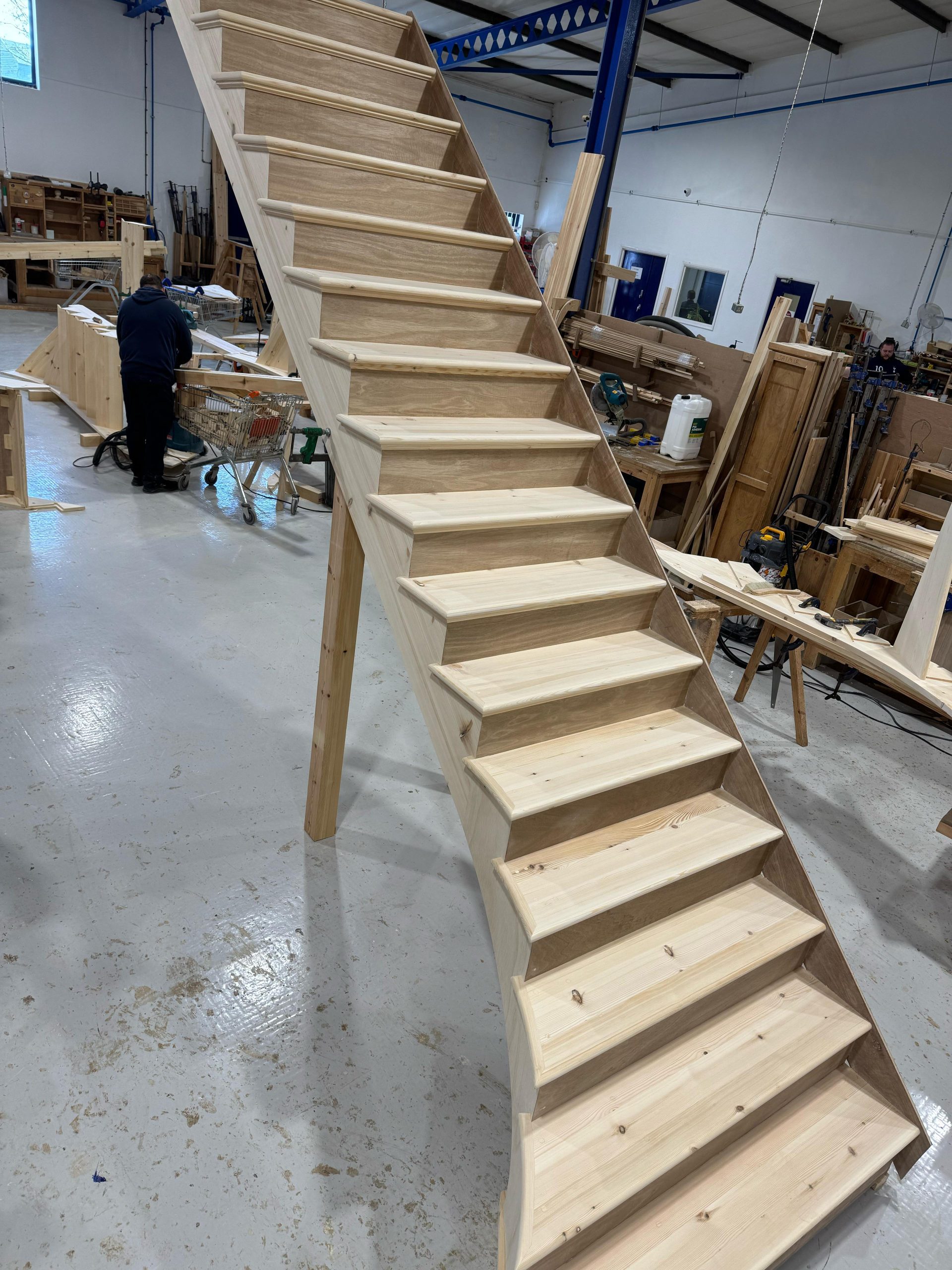
U- or L-shaped staircases are great for positioning along walls or in corners. By splitting the staircase into two runs with a landing or winder steps, you can fit it neatly within a small footprint.
Pros:
-
Flexible positioning
-
Safer descent than spiral stairs
-
Maximises under-stair storage options
Cons:
-
Needs careful measurement and planning
-
Slightly more complex construction
Best For: Loft bedrooms, especially in narrow terraced homes.
Materials to Consider
Choosing the right materials for your loft staircase can enhance the feeling of space and match your home’s aesthetic.
-
Timber: Warm, traditional, and easy to customise. Ideal for period homes.
-
Metal: Sleek and modern. Great for spiral staircases or industrial interiors.
-
Glass balustrades: Help open up the space visually, especially when combined with light timbers or painted finishes.
-
White-painted finishes: Make the staircase feel lighter and less imposing in tight spaces.
Combining different materials (e.g. oak treads with white risers and glass sides) can create a contemporary yet space-conscious look.
Maximising Space Around the Staircase
A small loft staircase doesn’t just need clever design — you’ll also want to make the most of the surrounding area. Here are some smart space-saving ideas:
-
Under-stair storage: Built-in cupboards, drawers, or even a compact desk can make use of the dead space.
-
Open risers: These create a lighter, airier look — although they may not always meet regulations for primary access stairs.
-
Wall-mounted handrails: Slimline designs free up width compared to full balustrades.
-
Skylights above the staircase: Add natural light, which makes the staircase feel larger and safer.
Working With a Specialist Staircase Manufacturer
In small spaces, bespoke design can make all the difference. A specialist timber staircase manufacturer can:
-
Measure and model your exact space
-
Propose regulation-compliant solutions
-
Customise every element — from tread depth to handrail style
-
Suggest finishing touches like paint, varnish, or concealed lighting
This is especially important in older UK homes, where quirks like uneven floors, low ceilings, or off-square walls can complicate off-the-shelf solutions.
Final Thoughts
A well-designed loft staircase for a small space can unlock the full potential of your home — without compromising on comfort, compliance, or style. From space-saving paddle stairs to compact winding designs, there’s a solution for every type of property.
If you’re unsure where to start, working with a specialist can help turn your vision into a practical, beautiful reality. With smart planning and quality craftsmanship, even the smallest UK home can benefit from a staircase that feels just right.
Need help planning your loft staircase? Speak to our team of expert staircase designers who specialise in traditional and modern styles for compact UK homes. We’ll help you make the most of your space — beautifully and safely. You can also try our online staircase builder tool.