Which Stairs Are Best for Home?
Choosing the right stairs for your home isn’t just about style — it’s also about safety, comfort, and meeting UK building regulations. Whether you’re replacing a staircase, adding one as part of an extension, or designing your dream home from scratch, the type of stairs you choose will influence both the look and practicality of your space.
In this guide, we’ll break down the different types of stairs available in the UK, the regulations you must follow, and the pros and cons of each option.
Understanding UK Stair Regulations
Before diving into styles, it’s important to know the basics of UK Building Regulations Approved Document K (for protection from falling, collision and impact) and Approved Document M (for accessibility in dwellings).
Some key rules for private staircases in UK homes:
-
Minimum Width: No legal minimum for private homes, but 800mm is comfortable; 900mm+ feels spacious.
-
Maximum Pitch: 42° for domestic stairs.
-
Risers and Goings: Each step’s rise (height) should be between 150mm and 220mm. The going (depth) should be at least 220mm.
-
Consistent Dimensions: All risers and goings must be the same size throughout.
-
Headroom: At least 2 m above the pitch line.
-
Handrails: Required if there are two or more risers; must be between 900mm and 1000mm high.
-
Landings: Required at the top and bottom; no door should swing over a step.
These rules ensure your stairs are safe and comfortable to use, and compliant with UK law.
Main Types of Stairs for Homes in the UK
1. Straight Stairs
The classic choice for simplicity and safety
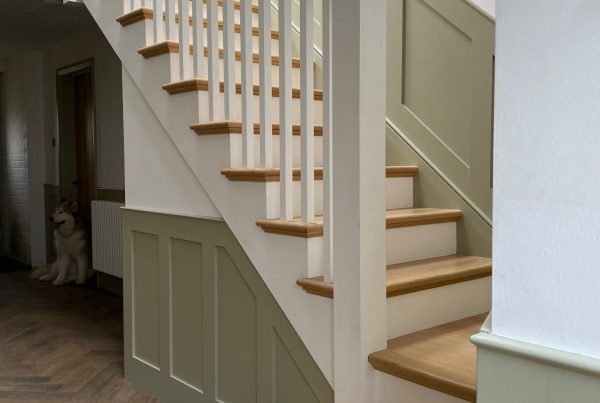
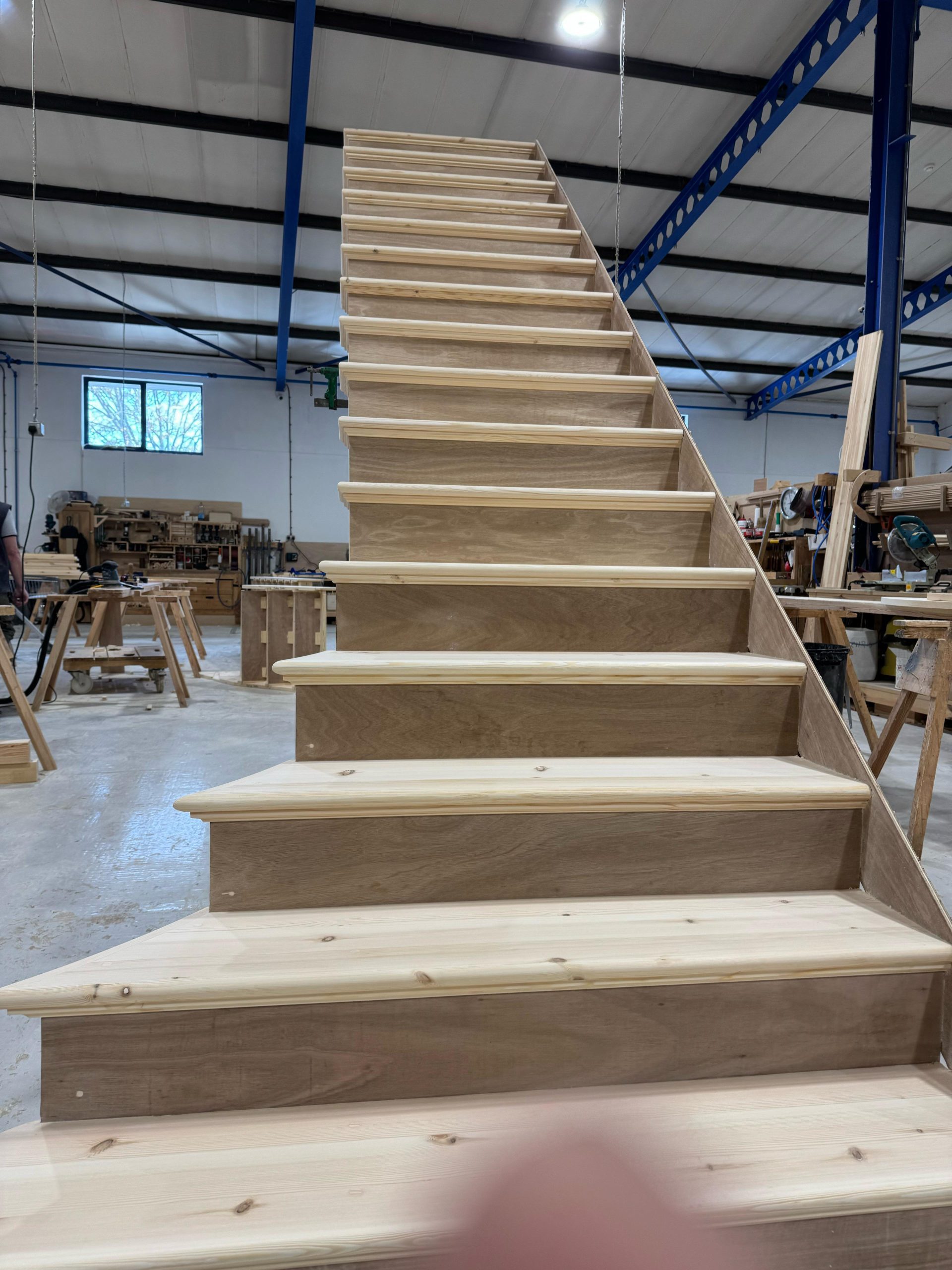
Straight stairs are the most straightforward type — one continuous flight from bottom to top. They are easy to build, cost-effective, and simple to navigate.
Pros:
-
Cost-effective and easy to construct.
-
Simple to measure and fit.
-
Works well in both traditional and modern homes.
Cons:
-
Requires more linear space.
-
Less visually dramatic than other designs.
Best for: Homes with enough length to accommodate a full flight without turning.
2. L-Shaped (Quarter-Turn) Stairs
Adds interest and can save space
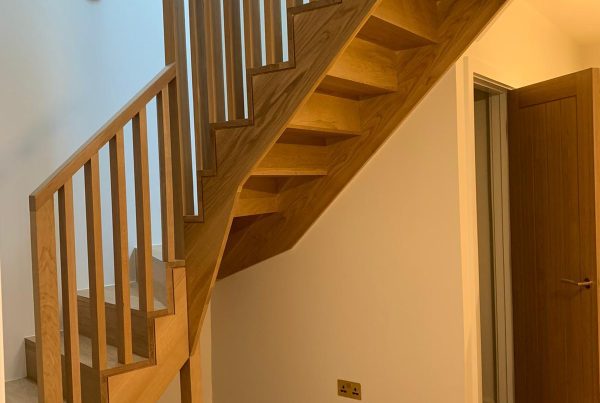
These stairs have a 90° turn, usually achieved with a quarter-landing or winder steps.
Pros:
-
More compact than straight stairs.
-
Adds visual interest and a sense of separation between floors.
-
Can be safer — a landing breaks the fall if someone trips.
Cons:
-
More complex to design and build.
-
May cost more than straight stairs.
Best for: Homes where you want to tuck the staircase into a corner or redirect its path.
3. U-Shaped (Half-Turn) Stairs
Perfect for compact layouts
U-shaped stairs make a 180° turn with a landing in the middle.
Pros:
-
Space-efficient in square or rectangular stairwells.
-
Offers a clear break between levels.
-
Can look very elegant in both classic and contemporary homes.
Cons:
-
More expensive due to complexity.
-
Can feel steeper if not designed carefully.
Best for: Small floor areas or homes where the staircase needs to fit into a tight footprint.
4. Winder Stairs
A twist without the landing
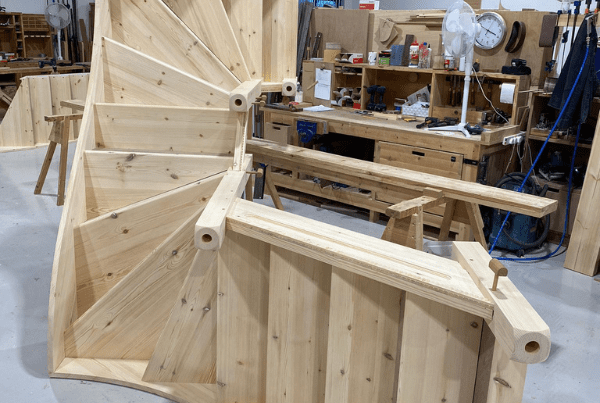
Winder stairs turn corners by using triangular or pie-shaped steps instead of a flat landing.
Pros:
-
Saves even more space than L- or U-shaped with landings.
-
Can look charming in period properties.
Cons:
-
Narrow treads on the inside edge can be harder to navigate.
-
Requires careful adherence to regulations to ensure safety.
Best for: Compact homes where every centimetre counts.
5. Spiral Stairs
A striking, space-saving feature
Spiral staircases wind around a central column and are often chosen for style or when space is limited.
Pros:
-
Dramatic focal point in a room.
-
Very compact footprint.
-
Can be built in a variety of materials (wood, metal, glass).
Cons:
-
Not always ideal for heavy foot traffic or moving furniture.
-
More difficult for people with reduced mobility.
Best for: Loft conversions, mezzanines, or as a feature staircase.
6. Floating or Open-Riser Stairs
Minimalist modern style
These stairs have treads without risers, creating a light, open appearance. Often paired with glass balustrades.
Pros:
-
Creates a spacious, contemporary look.
-
Lets light flow through the space.
Cons:
-
Stricter regulations apply for gaps (must not allow a 100mm sphere through).
-
Usually more expensive to construct.
Best for: Modern homes and open-plan designs.
Choosing the Right Material
The material you choose affects the staircase’s look, feel, and maintenance needs.
-
Timber: Warm and traditional; can be stained, painted, or carpeted.
-
Metal: Strong, modern, and versatile; great for industrial or minimalist styles.
-
Glass: Maximises light and creates a luxury feel; usually combined with wood or metal.
-
Concrete: Solid, durable, and great for modern architectural designs.
In UK homes, softwood (pine) is common for cost-effective builds, while oak offers a premium, long-lasting option.
Safety First: Features to Include
No matter the style, safety should always come first.
-
Non-slip treads: Especially important for timber stairs.
-
Sturdy balustrades: Should meet height and gap regulations.
-
Adequate lighting: Especially on winders and landings.
-
Continuous handrails: For ease of grip from start to finish.
Which Stairs Are Best for Home?
The “best” staircase depends on three main factors:
-
Space Available:
Small homes may benefit from winder or spiral stairs, while larger homes can accommodate straight or sweeping flights. -
Aesthetic Preference:
Do you want a traditional timber look, a modern floating style, or something in between? -
Budget:
Simple designs in softwood are the most affordable, while bespoke designs in premium materials will cost more.
Conclusion
The right staircase will complement your home’s style, fit your available space, and meet all UK safety regulations. Whether you opt for a simple straight run, a stylish L-shaped design, or a show-stopping spiral, it’s worth working with a professional to ensure both beauty and compliance.
A staircase is more than a way to get from A to B — it’s a key architectural feature that adds value, style, and functionality to your home.
Contact us today to disucss your staircase requirements or use our online staircase builder tool.